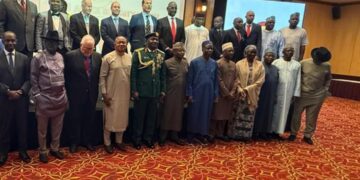


Security and intelligence stakeholders drawn from Nigeria’s border states and key national security agencies have called for the urgent establishment of a National Border Intelligence Fusion Centre (NBIFC) to strengthen intelligence-led border management and address the country’s evolving border and transnational security challenges.
The call was made at the conclusion of a four-day Workshop on Integrated Border Intelligence and Security Management, organised by the Defence Intelligence College (DIC), Karu, Abuja, in collaboration with Renown Consult Limited, Abuja.
The workshop brought together senior representatives from across Nigeria’s security and intelligence architecture, including the Nigerian Army, Nigerian Navy, Nigerian Air Force, National Intelligence Agency (NIA), Defence Intelligence Agency (DIA), Nigeria Customs Service (NCS), Nigeria Immigration Service (NIS), Ministry of Interior (MOI), Defence Space Administration (DSA) and Defence Headquarters (DHQ).
 Participants also included representatives of border-state institutions. Borno State was represented by Dr Satumari Abdulaziz Samaila, PhD, Commissioner, Ministry of Inter-Governmental Affairs and Special Duties, Borno State, and Dr Nana Safia Zakama, PhD, Senior Technical Assistant/Advisor on Disarmament, Demobilisation, Rehabilitation and Reintegration (DDRR). Dr Zakama emphasised the need to operationalise grassroots-driven early-warning systems for border security, stressing the importance of community-level intelligence and local knowledge in identifying and responding to emerging threats.
Jigawa State also fielded four participants, including Alhaji Umaru Sanusi, Commandant, Jigawa State Vigilante Group, and Dr Mohammad Faiz Bashir, Commandant-General, Jigawa State Hisbah. Their participation underscored the growing recognition of the strategic role of sub-national institutions and border communities in strengthening intelligence-led border security.
The workshop featured a series of expert-led sessions examining the multidimensional nature of Nigeria’s border security environment and the need for stronger intelligence integration.
Dr Farouk Tarfa, PhD, Head of Cross-Border Cooperation at the National Boundary Commission, opened the technical sessions with a lecture titled “Border Governance and National Security: The Role of the Intelligence Community.” He examined the relationship between effective border governance and national security, while highlighting the role of the intelligence community in safeguarding Nigeria’s territorial integrity.
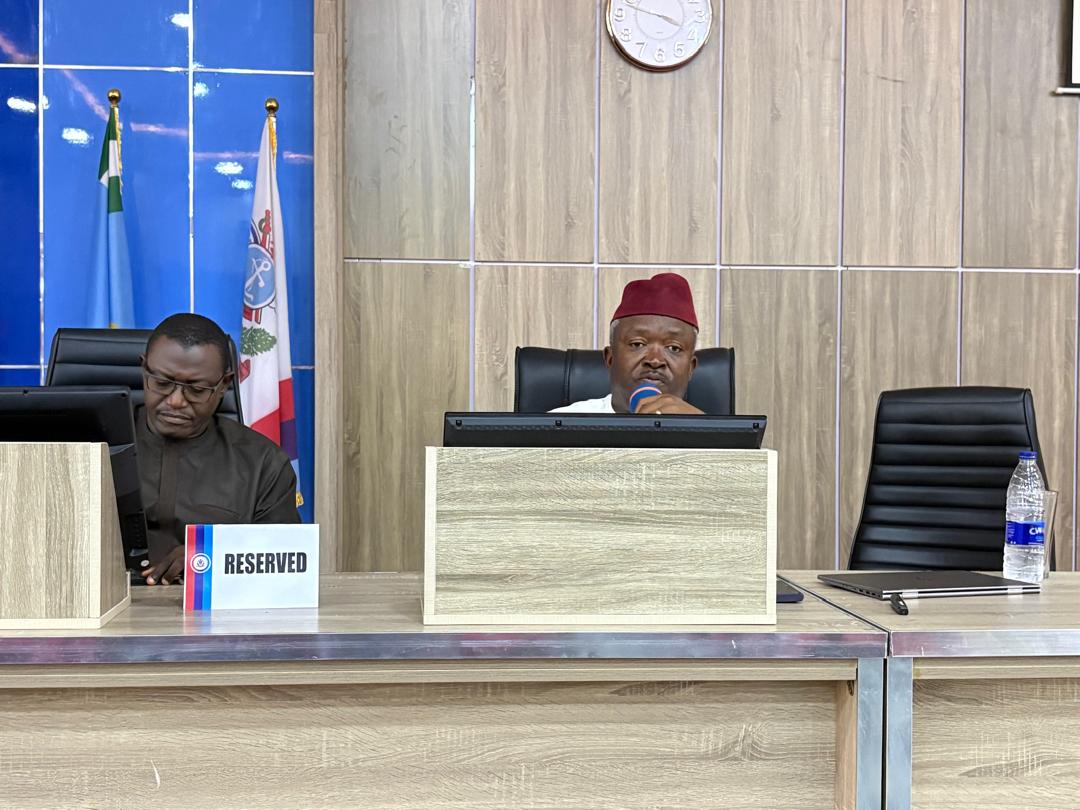
 This was followed by Maj. Gen. G. Oyefesobi (rtd), former Deputy Chief of Defence Intelligence at the Defence Intelligence Agency and pioneer Commander of the Nigerian Army Special Forces Corps, delivered a lecture on “Frameworks for Intelligence-Led Border Security Management in Nigeria.” The session examined the institutional and operational frameworks required to place intelligence at the centre of border security planning and decision-making.
Col. B.P. Bature (rtd), a veteran Nigerian Army intelligence officer with over 35 years of military service, delivered a session on “Essentials of Integrated Border Intelligence and Security Relationship Management.” His presentation focused on inter-agency coordination, information sharing and relationship management as essential components of an effective border intelligence architecture.
Rear Admiral J.A. Nwagu (rtd) presented on Border Areas Situation Awareness: Evaluating the Prospects of Activating All Stakeholders for Intelligence Gathering and Threats Mitigation, interrogating the practical prospects of mobilising security agencies, sub-national governments and border communities into a single, cohesive intelligence-gathering and threat-mitigation architecture.
Rounding off the technical sessions, Engr. IF Ikerionwu, an award-winning IT professional with over 10 years of experience in Cybersecurity and DevOps engineering, delivered a lecture titled “Modern Border Surveillance Technology: An Appraisal of Nigeria.” The presentation assessed Nigeria’s existing border surveillance capabilities and examined emerging technologies and opportunities for addressing identified capability gaps. Ikerionwu also advocated leveraging Artificial Intelligence to establish a centralised Border Intelligence Fusion Centre capable of integrating sensor, biometric, cargo, maritime and detection data across relevant border-security agencies. He noted that such an architecture would help transform Nigeria’s fragmented intelligence landscape into a unified, coordinated and intelligence-led border management system aligned with global best practices.
To consolidate the knowledge gained during the workshop and test participants’ practical understanding, participants were organised into five syndicate groups for a capstone exercise titled Exercise Eagle Watch.
The syndicates undertook collaborative group work and delivered presentations demonstrating their understanding of integrated border intelligence, inter-agency coordination and technology-enabled border security. The exercise also provided participants with an opportunity to translate the workshop’s theoretical concepts into practical operational responses to real-world border security scenarios.
At the conclusion of the workshop, participants adopted a communiqué containing recommendations aimed at strengthening Nigeria’s border-security architecture.
Among the key recommendations were:
1. Expansion of drone and satellite surveillance:
Nigeria should expand the deployment of drone and satellite-based surveillance technologies to improve persistent monitoring of remote, vulnerable and difficult-to-access border areas and strengthen real-time situational awareness.
2. Establishment of an inter-ministerial implementation task force:
The Office of the National Security Adviser (ONSA) should sponsor a high-level inter-ministerial task force to coordinate the phased implementation of the recommended border-security framework, supported by clearly defined milestones, responsibilities and sustainable funding.
3. Enactment of a Border Intelligence and Security Coordination Act:
The Federal Government should consider appropriate legislation to provide a clear legal and institutional framework for the proposed NBIFC and strengthen structured intelligence and information sharing among relevant security, intelligence and law-enforcement agencies.
4. Establishment of a National Border Intelligence Fusion Centre:
A centralised National Border Intelligence Fusion Centre should be established to integrate intelligence from relevant security, intelligence, immigration, customs, maritime and other border-management institutions into a common analytical environment capable of generating timely and actionable intelligence.
5. Strengthening of community-based border partnerships:
Structured partnerships with traditional rulers, community leaders, youth and women’s organisations, transport unions, traders and other local stakeholders should be institutionalised, supported by secure mechanisms for confidential reporting and protection of sensitive sources.
6. Institutionalisation of accountability and anti-corruption mechanisms:
Ethics and integrity programmes, independent oversight, transparent monitoring and performance-management mechanisms should be strengthened across border-security institutions to promote professionalism, accountability and public confidence.
Participants expressed confidence that the implementation of the recommendations, particularly the establishment of a National Border Intelligence Fusion Centre, would significantly strengthen Nigeria’s ability to detect, analyse, deter and respond to emerging border and transnational security threats.
The proposed fusion centre is envisaged as a critical mechanism for improving inter-agency intelligence sharing, strengthening situational awareness and supporting faster, coordinated decision-making across Nigeria’s border security architecture. The workshop further reinforced the importance of combining intelligence, technology, inter-agency collaboration and community participation in developing a more resilient and responsive border security system for Nigeria.
The Workshop on Integrated Border Intelligence and Security Management was organised by the Defence Intelligence College (DIC), Karu, Abuja, in collaboration with Renown Consult Limited, Abuja.