

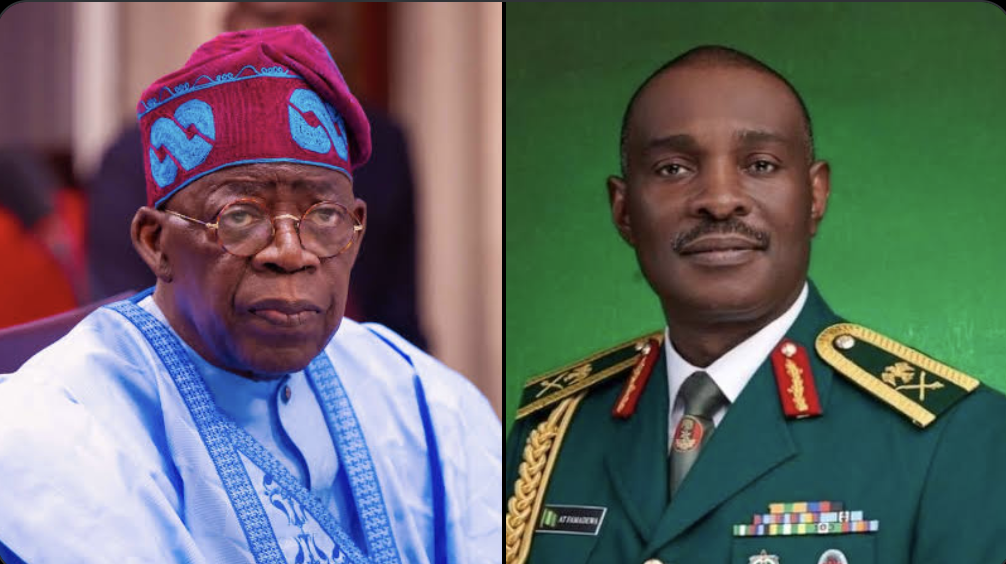
The appointment of Major General Adeyinka Fadewa as Nigeria’s first-ever Special Adviser on Homeland Security is not a routine bureaucratic shuffle. It is a confession, a correction and — if executed right — a turning point.
On February 13, 2026, former Kaduna Governor Nasir El-Rufai sat in a television studio and detonated a national security scandal in ninety seconds. Speaking live on Arise TV, he claimed he had overheard National Security Adviser Nuhu Ribadu ordering his arrest — because “someone tapped his phone and told us.” When pressed on the illegality, he was unapologetic: “Government thinks they are the only ones that listen to calls, but we also have our ways.”
The DSS moved. El-Rufai was subsequently arraigned on a five-count charge before Justice Joyce Abdulmalik of the Federal High Court in Abuja — accused of unlawfully intercepting the communications of a sitting NSA, communications the prosecution classified as Critical National Information Infrastructure. He pleaded not guilty. The case continues.
But the courtroom is not the story. What those ninety seconds revealed is: Nigeria’s apex security office was penetrable — its communications reportedly intercepted by informal, non-state networks. That is not a criminal disclosure. That is a systems failure.
A Combustible Moment
The El-Rufai episode did not occur in isolation. Zoom out and the security picture of the past twelve months is alarming by any measure.
In October 2025, the government abruptly cancelled Nigeria’s Independence Day parade — the first such cancellation since 1999 — amid a foiled coup plot. Six suspects, including a retired Major-General and a serving Police Inspector, were subsequently charged with terrorism and treason in a 13-count charge sheet at the Federal High Court. A seventh accused, former Bayelsa Governor Timipre Sylva, allegedly implicated in concealing the plot, remained at large at the time of charging.
Meanwhile, violent conflicts claimed 4,654 lives and 3,141 abductions across Nigeria in 2025 alone, per the Nextier Advisory Nigeria Violent Conflicts Database. Banditry overtook insurgency as the deadliest threat category. The northeast remains a theatre of active terror. The Niger Delta bleeds through maritime crime. The Middle Belt burns through farmer-herder violence.
And 2027 is months away. Analysts have documented that insecurity may drive low voter turnout in the general elections, with INEC potentially constrained to organise polls in conflict zones and ungoverned spaces. Political violence is already rising in pre-election cycles. Security forces are overstretched. The conditions for a compromised election are forming in real time.
This is the environment in which Section 14(2)(b) of the 1999 Constitution places a non-negotiable obligation on the President: “the security and welfare of the people shall be the primary purpose of government.” Not one purpose among several the primary purpose. The one from which every other function of the state derives its legitimacy. That obligation was being visibly unmet.
What Was Missing
No previous Nigerian president had established a dedicated homeland security advisory role at the federal level. The NSA’s office — regardless of who leads it — carries a mandate that simultaneously spans domestic threat management, international security diplomacy, inter-agency coordination, and strategic intelligence. When one office must hold all of that weight alone, something always falls through. The El-Rufai episode may be precisely what falls through.
President Tinubu has created a dedicated Office of the Special Adviser on Homeland Security — designed, in the Presidency’s own framing, to complement the NSA’s constitutional function rather than replace it. Ribadu remains in post. This is architectural expansion. And to lead it, the President has made the right call.
Why Fadewa
Major General Adeyinka A. Fadewa (Rtd) brings over three decades of distinguished service spanning national security strategy, intelligence fusion, counter-terrorism operations, and international security diplomacy. His is not a profile assembled for ceremony.
Between 2015 and 2021, Fadewa served as Principal General Staff Officer to the NSA at ONSA, where he spearheaded the establishment of Nigeria’s Intelligence Fusion Centre — integrating the DIA, NIA, DSS, Nigeria Police Force, and Armed Forces into a coordinated national threat assessment architecture. He did not theorise about intelligence fusion. He built the institution that makes it possible.
That single credential is the most analytically significant fact of this appointment. The El-Rufai wiretapping scandal was, at its core, an intelligence environment failure informal surveillance networks penetrating the NSA’s own communications. The Intelligence Fusion Centre Fadewa built was designed to close precisely those gaps: to create a controlled, multi-agency environment that denies non-state actors the operational seams they exploit.
Following retirement, he continued as Senior Research Fellow at the Nigerian Army Resource Centre, authoring the monograph “Policing and National Security in Nigeria” — a practical governance framework for civil-security collaboration. A general who writes doctrine in retirement converts operational experience into transferable policy. With a 2027 election demanding community-embedded, intelligence-led security deployment, that depth is not an academic virtue. It is an operational necessity.
What Must Now Follow
Appointment circulars do not secure communities. Outcomes do.
Three deliverables must follow — before election season, not after it. First, a classified audit of communications security across all national security agencies beginning with the NSA’s office — to close the vulnerability the El-Rufai episode exposed. Second, the Intelligence Fusion Centre must be scaled from a platform into a binding mandate, with real-time data-sharing and enforceable inter-agency participation. Third, a coordinated National Homeland Security Doctrine for the 2027 election environment — naming threats, assigning responsibilities, and creating accountability across every agency with a security role.
These are not aspirational. They are constitutional minimums.
The Bottom Line
Nigeria is governing under compound pressure: a live coup prosecution, a wiretapping trial involving the NSA’s own communications, political violence escalating ahead of 2027, and a body count from banditry and insurgency that is still climbing. Section 14(2)(b) is not being met at the scale the moment demands.
President Tinubu has responded belatedly, but substantively by creating a homeland security office and filling it with a man whose career is a direct institutional answer to Nigeria’s most persistent security failure: the inability to fuse intelligence, coordinate agencies and convert information into protection at the speed that threats demand.
The right doctor has arrived. The country is waiting to see the prescription filled in communities not circulars.
DefenceTimes Africa covers the African security landscape for policymakers, defence professionals, and informed citizens. Published: May 12, 2026 | defencetimes.africa