


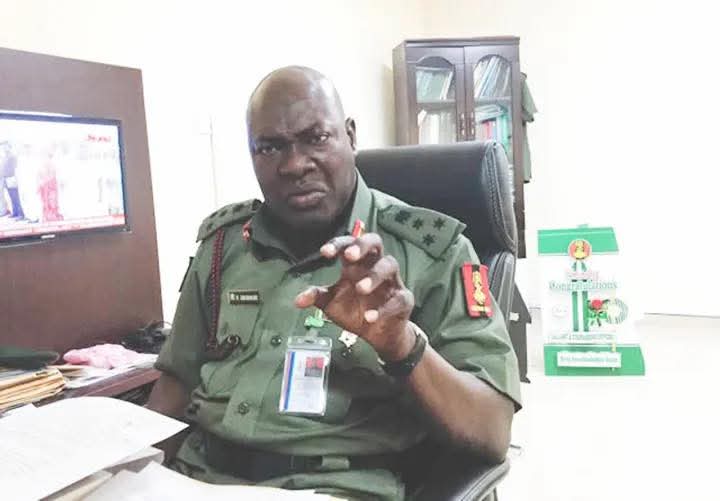
Some men carry rank. Some men carry responsibility. A rare few carry the burden of an entire nation upon their shoulders. Major General Rabe Abubakar belonged to the latter. For more than three decades, he wore the uniform not merely as a profession but as a calling. Through changing administrations, evolving security challenges, and countless sacrifices unseen by the public, he remained committed to one mission: the defence of Nigeria and her people.
He was not known for noise. He was known for substance. Soft-spoken yet firm. Gentle yet resolute. A soldier whose humility often concealed the strength of his convictions. In an institution where authority is measured by command, Rabe earned something even greater respect.
As a military spokesman, he became the voice of countless soldiers. He stood before cameras and microphones, explaining difficult operations, defending the sacrifices of troops, comforting families, and speaking for men and women deployed far from home.
When soldiers fell, he spoke. When victories were won, he spoke. When the nation demanded answers, he spoke. For years, he gave a voice to others. History will forever wrestle with the painful question of who found a voice for him when he needed one. His final days were not spent in comfort or retirement. They were spent in captivity.
For thirteen days, he endured circumstances no citizen should face, let alone a retired Major General who had dedicated his life to protecting others. Through fear, uncertainty, illness, and the harsh realities of captivity, he remained a symbol of courage.
The irony is difficult to ignore. A man who had spent decades defending Nigeria found himself depending on the choices of the very system he once served. It raises uncomfortable questions that transcend one man or one tragedy. What happens when kidnapping ceases to be merely about money?
What happens when the objective is leverage? What happens when lives become bargaining chips in conflicts larger than themselves? And what happens when the fate of a patriot rests upon decisions made by institutions he spent a lifetime defending?
These are questions that extend beyond Major General Rabe Abubakar. They speak to the moral test confronting every nation facing insecurity. Yet this tribute is not about politics.
It is about a man.
A husband.
A father.
A comrade.
A gentleman.
A patriot.
A sentinel.
A Nigerian.
Across the length and breadth of the country, his gentility was felt. He carried no tribal agenda. He belonged to no ethnic camp. He was respected by people who saw in him a rare quality increasingly scarce in public lifecharacter. Character cannot be kidnapped. Character cannot be negotiated. Character cannot be buried.
Even in death, it survives. The porcupine is a creature often misunderstood. It is not aggressive by nature. It seeks peace. It avoids conflict. Yet when threatened, it possesses quills capable of inflicting lasting pain upon those who underestimate it. Major General Rabe Abubakar was Nigeria’s porcupine. Gentle in speech. Measured in conduct. Principled in service. But his life, his sacrifice, and the questions his death leaves behind will continue to prick the conscience of a nation.
Long after headlines fade. Long after statements are forgotten. Long after ceremonies end. His memory will remain. His service will remain. His example will remain. And perhaps, one day, the lessons drawn from his sacrifice will help Nigeria hunt down the scourge of banditry and terrorism that continues to threaten her future.
For heroes do not always leave behind monuments.
Sometimes they leave behind questions that refuse to die.
Rest well, Major General Rabe Abubakar.
The soldier’s watch has ended.
The nation’s reflection has only just begun.